What is the Birkie?
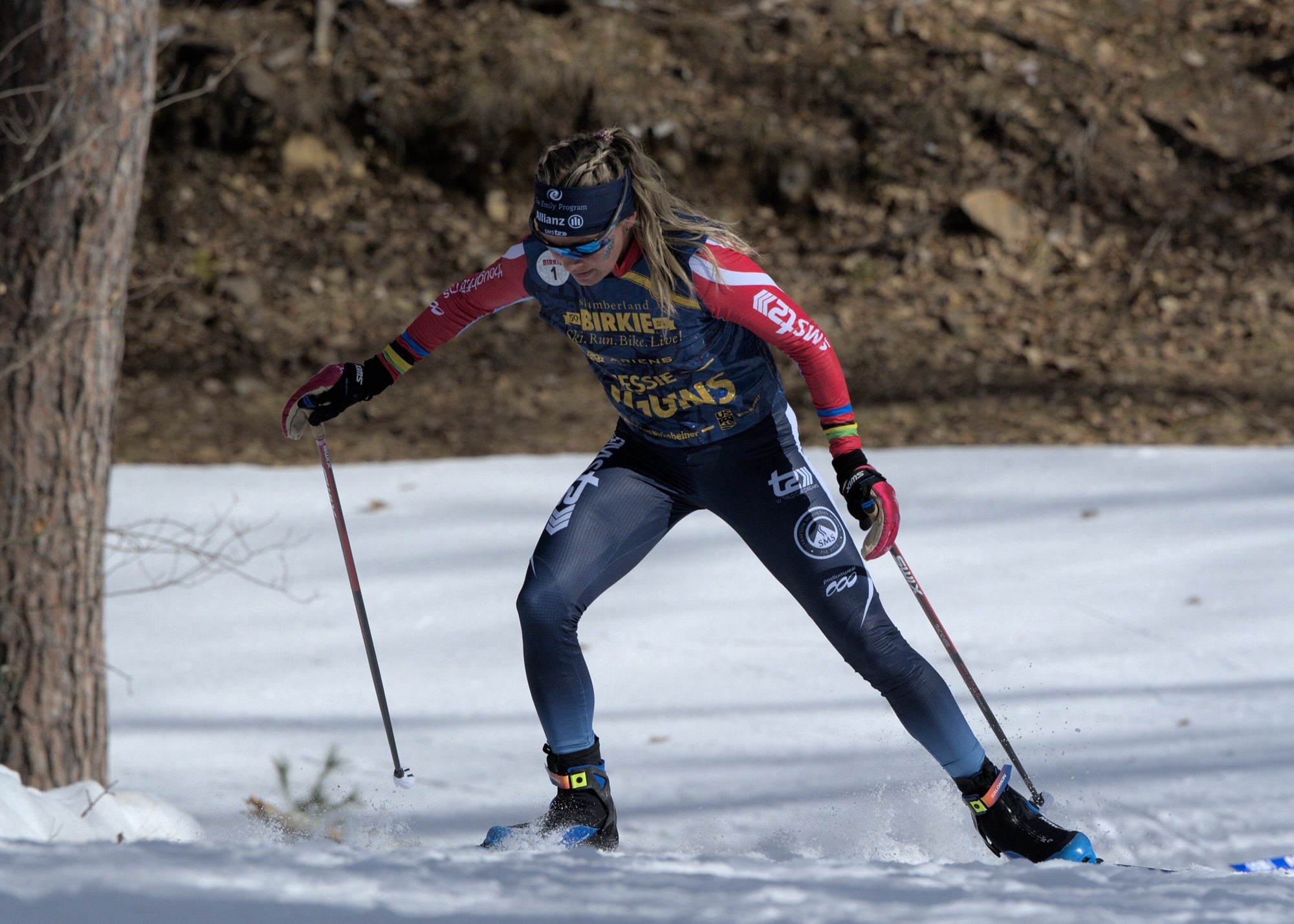
The American Birkebeiner is a cross-country ski marathon from Cable to Hayward, Wis.: 50 kilometers skate or 53 classic, ending on Hayward's Main Street. The 2027 race is Saturday, Feb. 27. Billed as North America's largest cross-country ski race, it drew nearly 12,000 skiers across its 2026 events.
That's the short version. The longer one: the Birkie is really a week of races, and most of the people in it aren't elite skiers. I've cross-country skied a handful of times. I'm entered in the Prince Haakon 15K this February and aiming for the full Birkie in 2028. This is everything I had to piece together from a dozen pages, in one place.
Where the name comes from
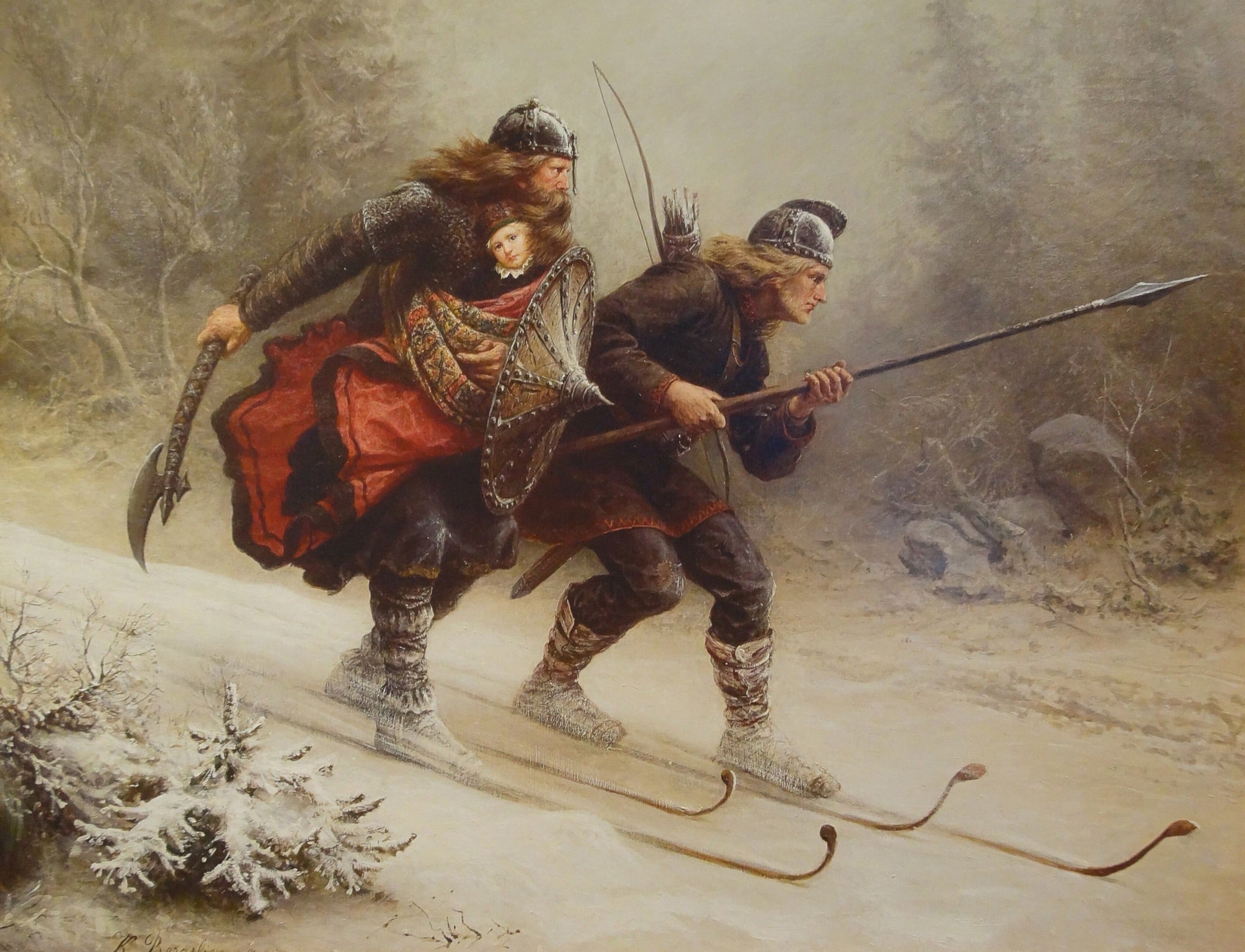
The name comes from Norway. The story goes that in 1206, Birkebeiner skiers carried the infant prince Haakon Haakonsson over the mountains between Lillehammer and Østerdalen to keep him safe. Norwegian historians treat the details as saga that grew with each telling, so call it a legend. The painting at the top of this page, Knud Bergslien's, is how most people picture it: two skiers, a spear, an axe and a baby bundled against a chest, flying downhill.
Norway turned the legend into a race. The Birkebeinerrennet, held since 1932, retraces the route over 54 kilometers from Rena to Lillehammer, and every skier carries a 3.5-kilogram pack. That's also why the 15K in Hayward is called the Prince Haakon.
How it started
Tony Wise bought "the hill" in Cable in 1947 for $750 and built Telemark Lodge on it. He patterned his race on Norway's Birkebeinerrennet.
The first one ran Feb. 24, 1973, from the Lumberjack Bowl in Hayward to Telemark Lodge in Cable, the opposite direction from today. Thirty-five skiers started in bitter cold. Thirty-four men and one woman, Jacque Lindskoog, finished, and she was later recognized as the official women's winner. Wise went into the National Ski Hall of Fame in 1988, and in 1978 the Birkie became a founding member of the Worldloppet, the international circuit of ski marathons.
Some of those early skiers never stopped. Ernie St. Germaine finished his 50th Birkie in 2024.
The races, compared
Birkie Week has three main races. Here they are side by side.
| Event | 2027 date | Distance | Course | Min. age | Entry | Finish by |
|---|---|---|---|---|---|---|
| American Birkebeiner | Sat., Feb. 27 | 50K skate, 53K classic | American Birkebeiner Trailhead, Cable, to Main Street, Hayward | 18 | $250 | 6 p.m. |
| Kortelopet | Fri., Feb. 26 | 29K, classic or skate | OO Trailhead to Hayward | 13 | $250 (under 20, $165) | 5 p.m. |
| Prince Haakon | Fri., Feb. 26 | 15K, classic or skate | Near Phipps Road to Main Street, Hayward | 13 | $250 (under 20, $165) | 5 p.m. |
The Kortelopet has run alongside the Birkie since 1977. Most people call it the Korte.
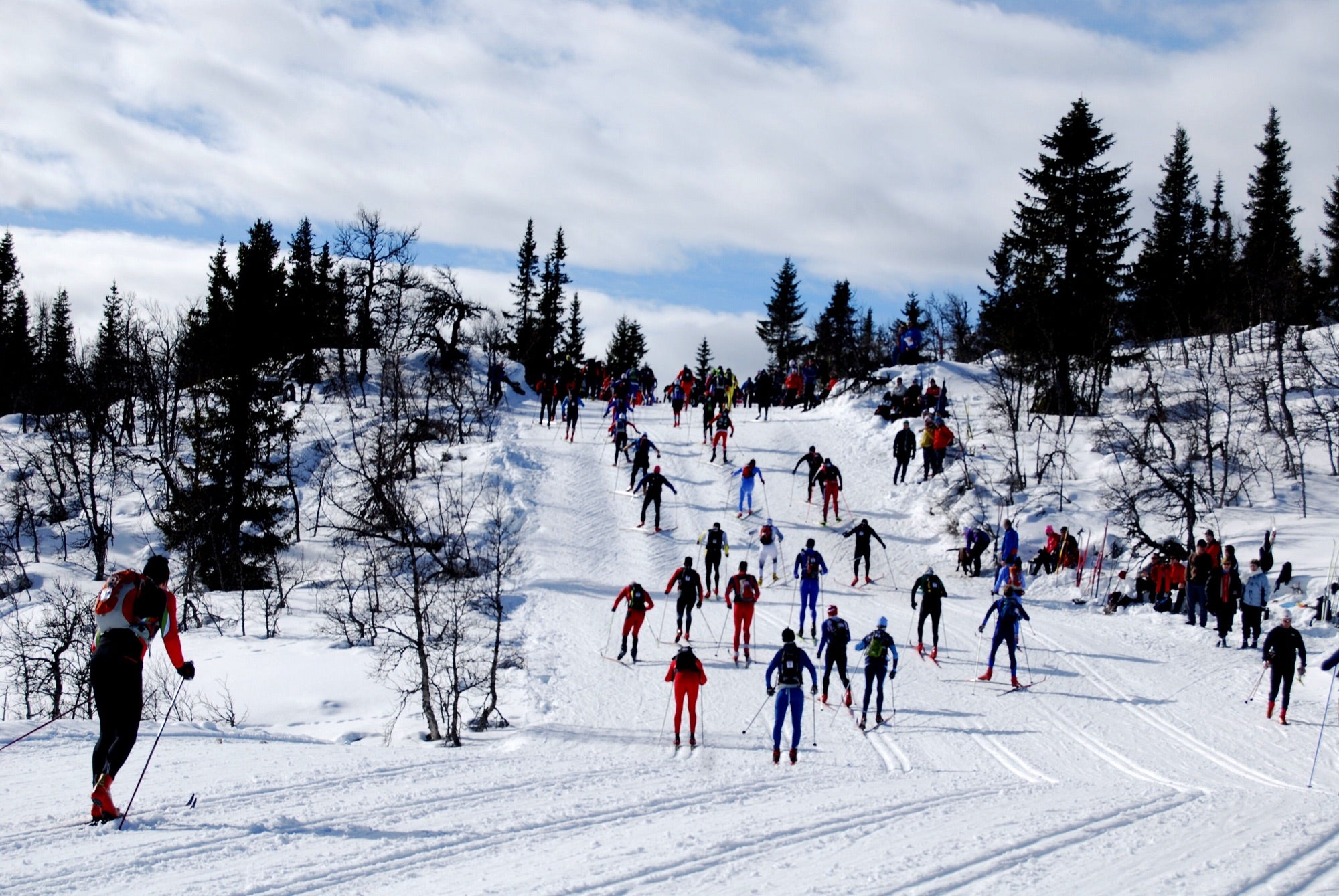
The Prince Haakon is the shortest, and it still gets the good parts. It starts north of Hayward, crosses Lake Hayward, goes over the International Bridge and finishes on Main Street. There's one checkpoint: skiers have to reach the Fish Hatchery, about 7K in, by 3:35 p.m.
The full Birkie also crosses that bridge. It's 198 feet long and carries skiers over U.S. Highway 63 just before town.
Which one should you pick?
If you've never raced on skis, start with the Prince Haakon. It's the same finish as the full Birkie and the same entry fee, and it gets you a better start wave the next year. It's also short enough that a missed week of training won't decide your day.
If you ski most winter weekends and want a real test, the Korte is the step up: 29K, with a 5 p.m. cutoff instead of 6. If you've already done one of those and finished feeling decent, the Birkie is next. And if you just want to be part of it without a bib, Wednesday's Open Track is timed but not a race.
Birkie Week 2027, day by day
Birkie Week runs Wednesday, Feb. 24, through Sunday, Feb. 28.
- Wednesday: the Open Track, a timed, non-competitive ski capped at the first 1,500 entrants.
- Thursday: the Barkie Birkie, Barnebirkie, Junior Birkie and Giant Ski. The Expo opens at Hayward High School, 10 a.m. to 7 p.m.
- Friday: the Kortelopet and Prince Haakon. The Expo runs 9 a.m. to 7 p.m.
- Saturday: the American Birkebeiner.
- Sunday: an on-snow demo day at Mt. Telemark Village.
Registration and cost
Registration is open now. Entry is $250 for adults and $165 for skiers under 20 in the Korte and Prince Haakon, the final price tier since Oct. 23. Races close when they fill, and there's no waitlist.
The fine print matters here. Entries aren't refundable, and you can't transfer one to another person or roll it to a future year. Optional refund insurance is offered at checkout or within five days of registering. Switching events or technique costs $25 until Jan. 19, 2027.
One more: register under the exact same name every year. Your results history follows that name, and it decides where you start.
First-timers and start waves
You don't need a qualifying race. New Birkie skiers start in Skate Wave 10 or Classic Wave 6.
Results from the Korte or Prince Haakon can move you up. Under the current rules, a Prince Haakon finish places you in Birkie Skate Wave 9. That's the plan I'm on: ski the 15K in 2027, start a wave earlier in 2028.
Bibs and the Birchleggers
Look closely at the bibs on Main Street and some of them tell you how many times that skier has done this. Skiers who have raced 20 or more American Birkebeiners earn the title Birchlegger. From their 20th race on, they ski in a purple and gold bib. At 30, it turns black and purple.
Birchleggers get a plaque and a pin the year they ski their 20th Birkie, and more pins at 30 and 40. Most also join the Birchleggings Club, a nonprofit separate from the Birkie's foundation that hosts an awards breakfast every Sunday after the race. The club is also open to skiers with 20 or more Kortelopet finishes, and to "Combi" skiers whose Korte and Birkie finishes add up to 20.
Ernie St. Germaine, who finished his 50th in 2024, is about as far down that road as anyone gets. For the rest of us, it starts with bib one.
Classic vs. skate
Classic is the original form of cross-country skiing: a straight-ahead stride with your skis in set tracks. Skate looks like speed skating, on the wide groomed lane next to those tracks. Most beginners start with classic. The Loppet Foundation's glossary is a good decoder for everything else you'll hear at the start line.
Can a beginner do it?
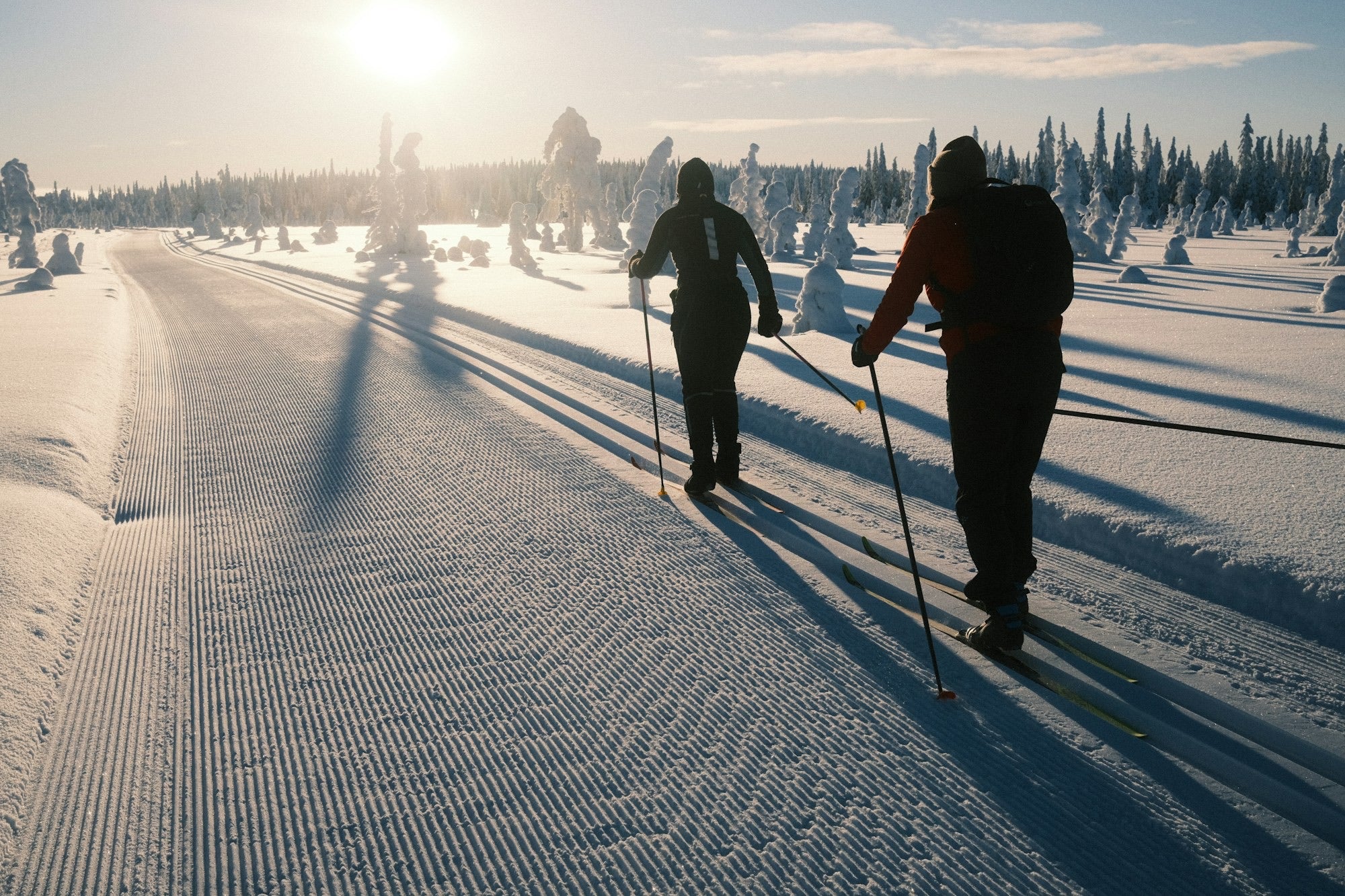
Yes, with a winter of training and the right race. The full Birkie's 6 p.m. cutoff gives back-of-the-pack skiers time, but 50 kilometers is a long way on skis. That's why a lot of first-timers start shorter.
The Birkie's Train to Ski page links a 2027 training plan from Endurance United. For a more structured start, Trail to Prince Haakon is a program built for first-time Birkie skiers. The beginner group costs $250, includes your Prince Haakon entry, and runs Dec. 8 to Feb. 26. Check the program page for where and when sessions meet.
One caveat is the weather. The Birkie was canceled for lack of snow in 2000 and 2017, and in 2024 it ran shorter races on loops of man-made snow near Cable. Pay for your entry knowing the course is up to the winter.
How to watch it
You don't have to ski to go. The official spectator guide covers the three best spots: the trailhead start, the International Bridge and the Main Street finish. At the finish, roughly one skier crosses every second. In 2024, a winter short on snow, 13,000 people still skied and the race drew more than 25,000 spectators and about $20 million for the local economy.
We watched in 2026 as part of a weekend in the Northwoods. Book lodging early. The Birkie will email a lodging directory on request, and the Hayward and Cable chambers list places to stay.
FAQ
When is the 2027 Birkie?
Saturday, Feb. 27, 2027. The Kortelopet and Prince Haakon are the day before, Friday, Feb. 26.
How long is the Birkie?
50 kilometers for skate and 53 for classic, from Cable to Hayward. In 2026, Luke Jager set the course record: 1:50:45.
Do you need to qualify?
No. New skiers start in Skate Wave 10 or Classic Wave 6. Past Korte or Prince Haakon results can move you up.
What's the minimum age?
18 by race day for the Birkie. 13 for the Kortelopet and Prince Haakon.
What's the Kortelopet?
The Birkie's 29K race, held the Friday before. You can ski it classic or skate, and it finishes in Hayward like the full race.
What do the purple bibs mean?
A purple and gold bib means the skier is on their 20th Birkie or later, which makes them a Birchlegger. A black and purple bib marks 30 years.
Registration deadlines and wave rules move every year. The Packet, our newsletter every other Thursday, carries the Birkie reminders so you don't miss one.

